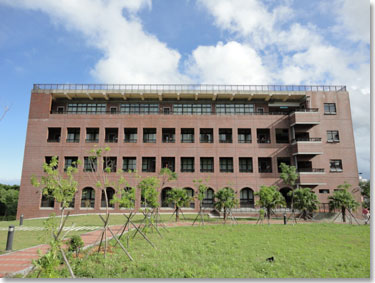
 校園風景圖
校園風景圖Importance of Establishing the Graduate Institute
I. Emerging Trends in Biomedical Sciences
Recent advances in biomedical sciences have demonstrated that the integration of molecular biology and cell biology has become indispensable for understanding the mechanisms of life. However, research approaches focusing on a single gene are no longer sufficient to comprehensively investigate the complexity of biological systems.
The advent of the omics era—including genomics, transcriptomics, proteomics, and metabolomics—has revolutionized biomedical research. These state-of-the-art technologies are expected to drive groundbreaking discoveries throughout the twenty-first century, significantly expanding our understanding of biological processes and disease mechanisms.
In parallel, systems biology has emerged as a highly interdisciplinary field that integrates mathematics, physics, engineering, computer science, and life sciences. By analyzing the vast amounts of biological data generated through omics research, systems biology aims to develop mathematical models capable of describing and predicting biological functions. Whether the complexity of life can ultimately be explained through mathematical equations remains an exciting question for future scientific exploration.
II. Major Diseases in Modern Society
According to the World Cancer Research Fund and the American Institute for Cancer Research, chronic diseases such as cancer, cardiovascular disease, and diabetes have become the leading causes of mortality worldwide.
In many Western countries, cardiovascular disease accounts for approximately 40–50% of all deaths, while cancer is responsible for more than 30%. Prostate cancer and breast cancer are among the leading causes of cancer-related deaths in developed countries, with mortality rates exceeding 100 deaths per 100,000 population in some regions. Colorectal cancer and lung cancer also remain major public health concerns, with mortality rates of approximately 40 and 50 deaths per 100,000 population, respectively.
Taiwan has experienced similar epidemiological changes as lifestyles have become increasingly westernized. According to statistics released by the Ministry of Health in 2009, the five leading causes of death were malignant neoplasms (cancer), heart disease, cerebrovascular disease, pneumonia, and diabetes mellitus. Cancer alone accounted for 39,917 deaths, representing 28.1% of all deaths, with an age-standardized mortality rate of 132.5 deaths per 100,000 population—surpassing that of many Western countries.
Addressing these major health challenges requires both societal efforts to promote healthier lifestyles and sustained investment in biomedical research. Advancing our understanding of these diseases is essential for improving public health and enhancing the quality of life for future generations.
III. Integrating Life Science and Clinical Medicine
Since the implementation of Taiwan's National Health Insurance (NHI) program in 1995, access to healthcare has improved substantially, and the system has gained international recognition for its effectiveness. While infectious diseases have been brought under effective control, the prevalence of chronic diseases—including cancer, cardiovascular disease, diabetes, obesity, and age-related disorders—has continued to increase. This trend underscores the urgent need for continued biomedical research and translational medicine.
Founded in March 2009, Mackay Medical College is an integral member of the Mackay Memorial Hospital healthcare system and receives strong institutional support from the Mackay Medical System. Many distinguished clinician-scientists from Mackay Memorial Hospital also serve as adjunct faculty members of the Graduate Institute of Biomedical Sciences.
Our faculty possess extensive expertise in both basic biomedical sciences and clinical medicine, with distinguished records in teaching and research comparable to those of leading universities in Taiwan. More importantly, as the Graduate Institute and Mackay Memorial Hospital belong to the same healthcare system, they maintain close collaboration in education, research, and clinical practice. Numerous large-scale interdisciplinary research projects are currently underway.
The Graduate Institute of Biomedical Sciences is committed to advancing research on the prevention, diagnosis, and treatment of major chronic diseases. Through the combined strengths of the Institute and Mackay Memorial Hospital, we strive to generate innovative scientific discoveries that contribute to improving human health and promoting the well-being of society.